Real or synthetic: where AI fits in commercial photography, and where it doesn't
Real or synthetic: where AI fits in commercial photography, and where it doesn't
An honest look at where AI works for advertising imagery, where it falls flat, and what it means for brands building on authenticity.
Two opposite things are happening in commercial photography right now, and the trade press has only really noticed one of them.
The conventional story — repeated at every industry conference, every LinkedIn thread, every think piece — is that AI is going to flatten commercial photography. Render farms will replace studios. Prompt engineers will replace photographers. Brands will save money. Schedules will compress. The whole craft will become a commodity.
Some of that is happening. But the more interesting shift is happening at the other end. As generative AI gets better at producing plausible commercial imagery, certain brands — particularly food brands, drinks brands, and any brand built on the idea of authenticity — are quietly doubling down on real shoots. Not because they don't understand the technology. Because they understand their own positioning.
This piece is about that shift. Where AI genuinely makes sense in commercial photography. Where it falls flat. And what it means for brands that have spent years telling their customers they care about real ingredients, real craftsmanship, real provenance.
I'll be straight about my position upfront: I run a commercial photo and video studio. I have a financial interest in real shoots. But I'm not anti-AI — we use CGI and generative tools where they make sense, for shots that are physically impossible or where the cost-to-result ratio justifies it. What I'm against is the assumption that AI is the right answer by default. For a lot of advertising work — particularly anything that depends on the reader believing what they're looking at — it isn't.
Where AI genuinely makes sense
Let me start with where the case for AI is real. There are categories of commercial imagery where AI and CGI are not just acceptable — they're the better tool for the job.
Visualising products before they exist.
If a brand is launching a new range and needs hero imagery for the press kit before any sample is finished, generative tools can produce something visualising the design intent without a physical prototype. The brief isn't "show us the actual product" — it's "give us a visual of the concept." AI handles that fine.
Composite shots that would otherwise require impossible logistics.
A shot that needs the same product in five different environments, lit by five different golden hours, in five different cities, in a single composition. The pre-AI version of this required a small army of compositors. AI compresses that. Same outcome, smaller bill, no obvious downside.
Replacing things that no longer exist or never will.
Discontinued packaging that needs to appear in a campaign retrospective. A historical version of a product. A speculative future variant. The choice is often "AI render or no shot at all" — and AI is better than nothing.
High-volume catalogue imagery for products with no inherent visual interest. Industrial parts, technical components, things where the buyer cares about specifications more than mood. AI can handle the visual side; the human time goes into accuracy.
Where AI falls apart
Food is where this falls apart most obviously.
There's a quality to AI-generated food imagery that's hard to describe in technical terms but immediately recognisable to anyone who actually shoots food for a living. The texture is wrong. The condensation behaves like a video-game render. The shadows under the ingredients are too clean, too mathematically correct. A real strawberry has imperfections, asymmetry, a dimpled surface that catches light in a slightly chaotic way. An AI strawberry looks like the platonic ideal of a strawberry — which means it looks like a plastic strawberry.
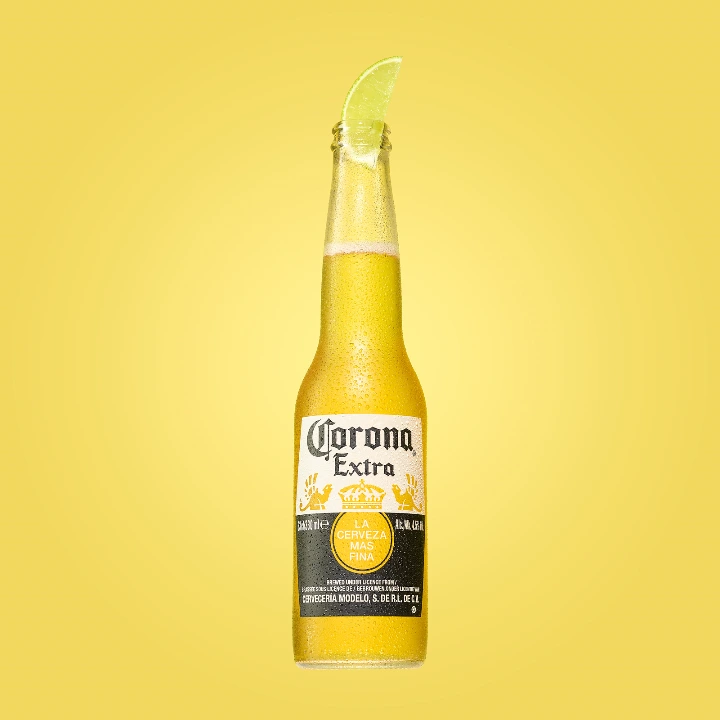
Real condensation behaves like this. AI condensation doesn't.
The same applies to anything where the product is meant to be experienced — fragrance bottles, skincare textures, fabrics, materials, anything that's selling the feeling of having the thing rather than just its visual identity. AI can show what something looks like. It struggles to show what it feels like to have it.
This isn't an argument that AI imagery is always obvious. The best generative work is genuinely impressive and the technology is improving fast. But the floor of "obvious AI" is moving slowly enough that for high-stakes advertising — work that has to land with audiences who are themselves becoming sophisticated AI-spotters — the risk of looking synthetic is real. And the cost of that risk, for the wrong brand, is significant.
Brand values can't afford the contradiction
There's a category of brand for which using AI imagery isn't just an aesthetic risk — it's a values contradiction.
Any brand that markets itself on real ingredients, honest sourcing, traditional craftsmanship, family heritage, single-origin everything, slow production, hand-finished, artisanal, locally-grown, ethically-traded, or any of the dozens of words that have come to mean "we care about the realness of what we make." That brand cannot credibly run synthetic imagery for that real product. The contradiction is too obvious.
Imagine a chocolatier whose entire positioning is "we still hand-temper our chocolate the way our grandfather did" running an AI-generated hero ad of their truffles. The advertising imagery is, by definition, not hand-tempered. It's not even chocolate. It's a probability distribution. The brand spends years building credibility on real craftsmanship, and a single generative render undermines the whole story.
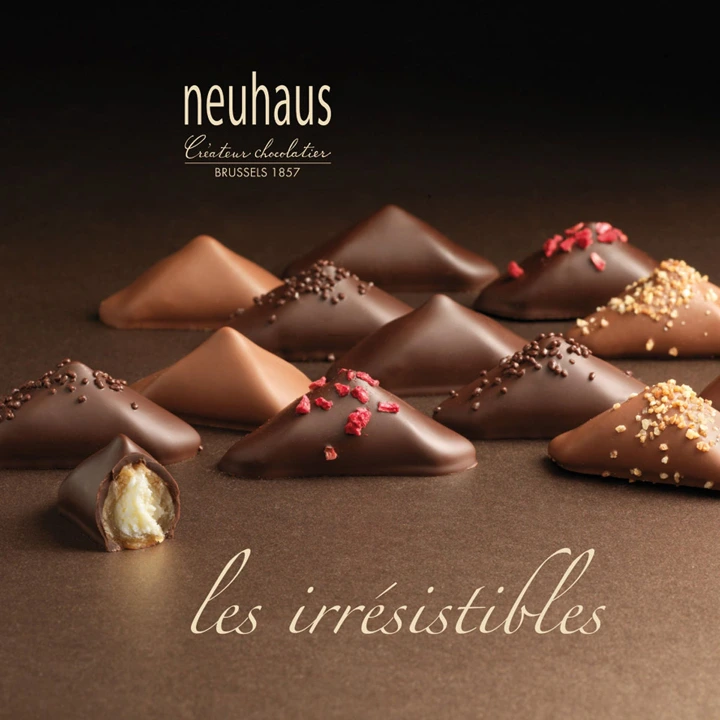
Made by hand. Shot by hand. Hard to fake without the brand noticing.
This isn't theoretical. Most premium food and drinks brands sit in this category. So do most natural cosmetics brands, most artisan FMCG, most organic produce brands, most heritage-driven categories. These brands have spent decades — sometimes centuries — building the meaning of their words. Real actually means something for them. Putting it next to AI-generated is a brand-equity transaction with no upside.
The smarter brands in these categories are starting to recognise this. The shift back to real shoots isn't about being anti-technology. It's about understanding that for a brand built on authenticity, the medium of advertising has to be consistent with the message of the brand. You can't sell craft with un-crafted imagery and expect the message to land.
Brand managers are starting to push back when their agencies propose AI hero work for products that depend on perceived realness. Production directors at agencies are starting to see this in briefs. The pendulum hasn't swung yet, but the leading edge of it is moving.
A working framework
A practical framework for deciding when to use real versus synthetic on a brief, in plain terms.
Use real when:
- - The product or category depends on the viewer believing it's real (food, drinks, fragrance, materials, anything sensory).
- - The brand has built equity on authenticity, craft, heritage or honesty.
- - The audience is sophisticated enough to spot AI and category-aware enough to penalise it.
- - The hero imagery will be used in high-stakes contexts — TV, OOH, flagship campaigns — where the cost of looking fake outweighs production cost.
Use CGI or AI when:
- The brand has no equity invested in authenticity and the audience won't punish synthetic imagery.
The point isn't that one is better than the other. The point is that the choice is a strategic one — and getting it wrong costs more than the production budget either way.
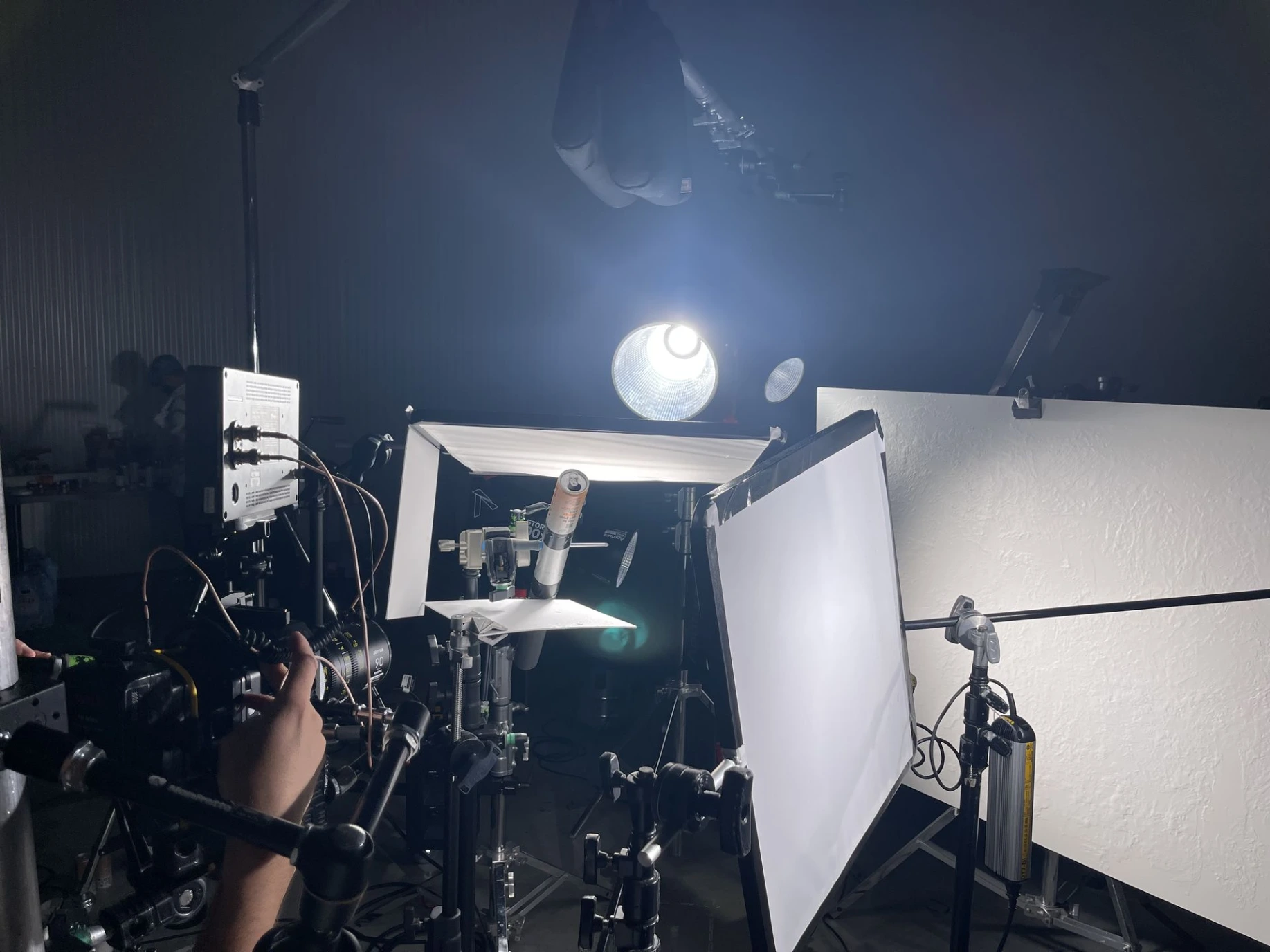
Real shooting isn't abstract. It's a controlled environment, real lights, real product, time taken to get the shot right.
What this means
The most interesting commercial photographers I know aren't worried about being replaced by AI. They're paying attention to which categories of work AI is taking over, which categories are quietly shifting back toward real, and what the long-term implications are for brands building on authenticity.
If you're thinking about where the line should sit on your next campaign — what to shoot real, what to render, and what to do differently from your competitors — get in touch. We can talk through it.